



In GPUs, “Ti” is a label used by NVIDIA to indicate a more powerful version of a base graphics card model. A Ti card usually sits between the standard version and the next higher-tier GPU in the lineup. These Ti cards are said to offer more CUDA cores, higher clock speeds, or a wider memory bus compared to the non-Ti version, resulting in better performance.
Though, do keep in mind that the “Ti” term is only used by NVIDIA. AMD does not use it in its product names.
What Is the Full Form of Ti in Graphics Cards?
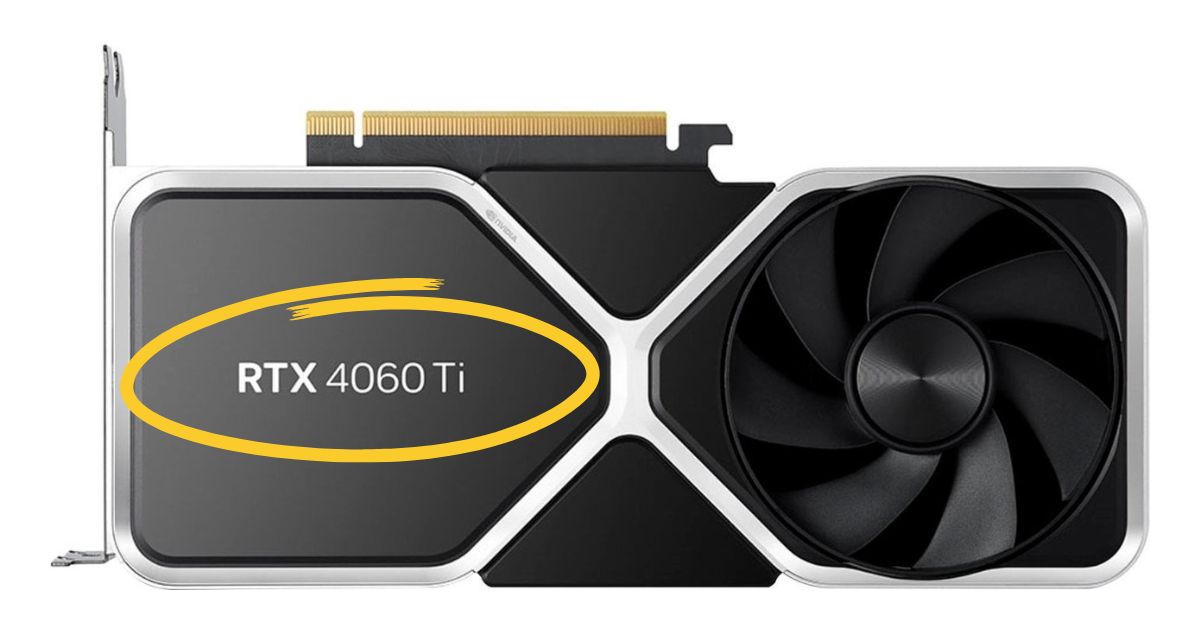
“Ti” stands for Titanium. NVIDIA uses it as a branding term to indicate a stronger variant of a standard GPU model.
It does not mean the card contains titanium material. It is purely a naming convention to show improved specifications over the base version.
For example, the GeForce RTX 3060 Ti is a more powerful version of the GeForce RTX 3060.
Ti vs. Non-Ti GPUs: Key Differences Explained
A Ti GPU is generally a partially unlocked or higher-performing version of the same GPU architecture. It often includes more enabled cores and higher bandwidth. Here’s a simple comparison to give you more clear perspactive:
| Feature | Non-Ti GPU | Ti GPU |
| CUDA Cores | Lower | Higher |
| Clock Speeds | Standard | Often slightly higher |
| Memory Bus | Narrower (in some cases) | Wider (in some cases) |
| Gaming Performance | Good | 10–25% higher (varies by model) |
| Price | Lower | Higher |
| Power Consumption | Lower | Slightly higher |
Is a Ti GPU Better Than the Standard Version?
Yes, in terms of raw performance, a Ti GPU is almost always better than its non-Ti version. However, whether it is “better” for you depends on your needs.
A Ti GPU makes sense if:
- You want higher frame rates at 1440p or 4K
- You use ray tracing and need extra headroom
- The price gap is reasonable
A standard GPU may be enough if:
- You play at 1080p
- You are on a tight budget
- The performance gap does not justify the extra cost
The improvement is usually noticeable in running AI models, or playing demanding games, and creative workloads like rendering or video editing.
Ti vs. Super: Understanding NVIDIA’s Naming Scheme
NVIDIA recently reintroduced the “Super” branding (e.g., RTX 4070 Super), which complicates things. Here is the hierarchy you need to know:
- Standard (Base): Entry performance for the model number (e.g., RTX 4070).
- Super (Mid-tier Refresh): Mid-cycle upgrade with ~10-20% gains over base, often rivaling or slightly trailing the original Ti (e.g., RTX 4070 Super trails RTX 4070 Ti by ~10%).
- Ti (Higher Tier): Direct upgrade over base with more cores, clocks, or bandwidth, typically 15-25% faster than standard (e.g., RTX 4070 Ti).
- Ti Super (Top Tier): Combines both for peak performance in the tier, beating standard Ti by 5-15% (e.g., RTX 4070 Ti Super).
Popular Ti GPUs
- RTX 5070 Ti (RTX 50 series flagship mid-range Ti)
- RTX 4070 Ti / 4070 Ti Super
- RTX 4060 Ti (8GB / 16GB variants)
- RTX 3070 Ti / 3060 Ti
- RTX 3080 Ti (higher sibling to RTX 3080)
- RTX 3090 Ti (top Ampere flagship Ti)
- RTX 2080 Ti
- GTX 1080 Ti / 1660 Ti
Should You Buy a Ti GPU in 2026?
Honestly, there is no clear answer; it all depends on how you plan to use your system. If you’re targeting 1440p or 4K gaming, enabling ray tracing, or running heavier workloads like video editing or 3D rendering, I would lean toward the Ti version. The extra CUDA cores and, in some cases, wider memory bandwidth can translate into smoother frame rates and better performance headroom. However, if you mainly play at 1080p or are on a tight budget, I would suggest carefully comparing prices.
In many situations, the standard model delivers solid performance, and the jump to the Ti variant may not justify a large premium. I’d recommend looking at real-world benchmarks and current market pricing before deciding, rather than assuming the Ti model is automatically the better buy.
FAQs
“Ti” is NVIDIA’s label for a more powerful version of a base GPU, with extra CUDA cores, higher clocks, or wider memory bus for better performance.
Yes, Ti cards outperform their non-Ti counterparts by 10-25%, but value depends on your budget and resolution needs.
No, it’s mid-range, strong for 1440p gaming but below high-end like RTX 4080/5090.
Ti usually edges out Super (e.g., RTX 4070 Ti > 4070 Super by ~10%), but check benchmarks per model.