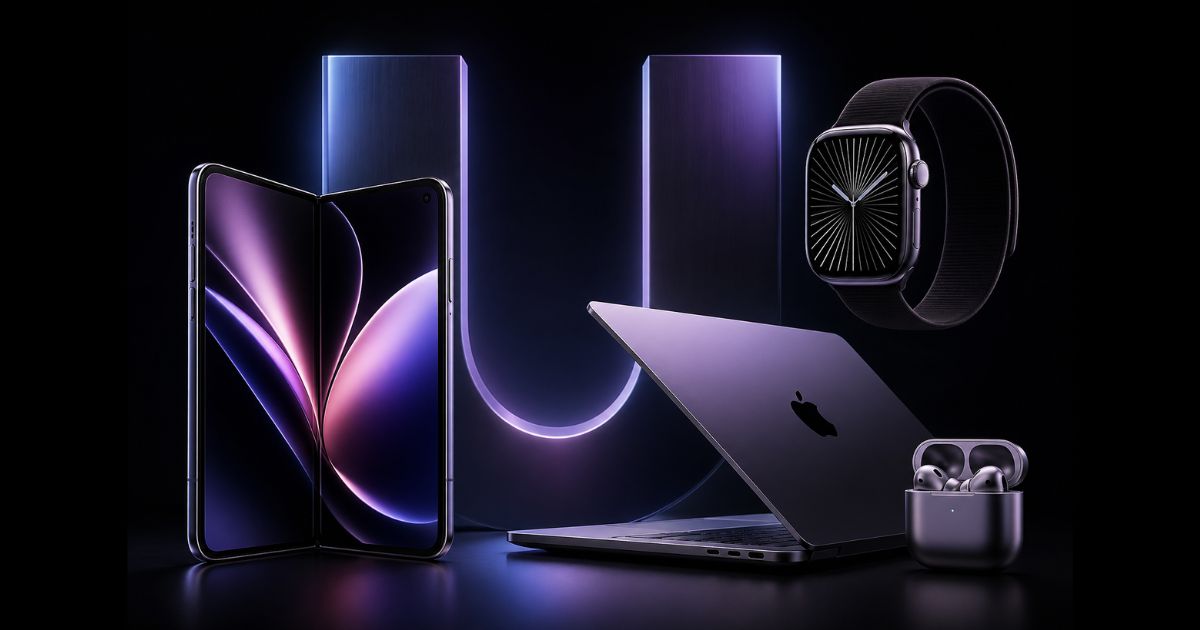




Apple is reportedly preparing a major MacBook Pro redesign that could arrive later this year, bringing together several significant changes at once, a new display technology, touch input, a fresh camera design, and next-generation silicon.
The report comes from prominent Apple analyst Ming-Chi Kuo and Bloomberg’s Mark Gurman, who have both pointed to the same upgrade cycle.
OLED and Touch Are Coming to the MacBook Pro
The most talked-about change is the shift from mini-LED to OLED display technology. This would make the MacBook Pro the first Mac to use OLED, which Apple currently uses across the iPhone and Apple Watch lineup. The practical benefit is straightforward: OLED panels can turn off pixels individually, producing true blacks and better contrast than mini-LED backlighting allows.
Alongside the display upgrade, Apple is reportedly adding touchscreen support to the MacBook Pro for the first time. This goes beyond simple touch input. According to reports, the company is reworking macOS so that UI elements adapt dynamically when touched, menu items may expand automatically, and standard gestures like pinch-to-zoom and swipe scrolling will be natively supported.
The current notch housing the front camera is also expected to go. Apple is said to be replacing it with a smaller hole-punch cutout and bringing the Dynamic Island, first introduced with the iPhone 14 Pro, to the Mac. On the iPhone, Dynamic Island repurposes the camera cutout as an interactive space for notifications, live activities, and system controls.
M6 Chip, Thinner Body, and a Possible New Name
The new MacBook Pro models are expected to be powered by M6 chips built on a 2nm architecture. Apple has not confirmed specs, but the node shrink is expected to deliver meaningful gains in both performance and efficiency.
Apple is also said to be working on a thinner chassis. The 2021 MacBook Pro redesign had actually made the laptop thicker to bring back ports like HDMI and SD card slots. It remains unclear whether this slimming effort will come at the cost of any of those ports. Apple’s move to in-house silicon is reportedly what makes the thinner design feasible, Apple Silicon chips generate less heat and require less cooling hardware than the Intel-based models they replaced.
On the naming front, Gurman has suggested Apple might not position these as direct successors to the existing M5 Pro and M5 Max models. Instead, the company could introduce a “MacBook Ultra” tier, placing these machines at the top of the lineup while keeping M5 models available at lower price points. That would extend Apple’s existing “Ultra” branding from the chip lineup to the product name itself.
The launch window is expected to be October or November this year.