



TOPS stands for Tera Operations Per Second. That’s trillions of math operations per second. It’s the primary way companies measure speed in AI processors like NPUs. Lately, many companies have started using TOPS numbers to show how fast their chips handle stuff like image recognition or chat AI.
And since AI has become the new buzzword, TOPS numbers have become an integral part of almost every new processor, laptop, or phone launch. That’s why in this article, I decided to talk about everything about TOPS so you can cut through the marketing noise and focus on what really matters.
What is the NPU?

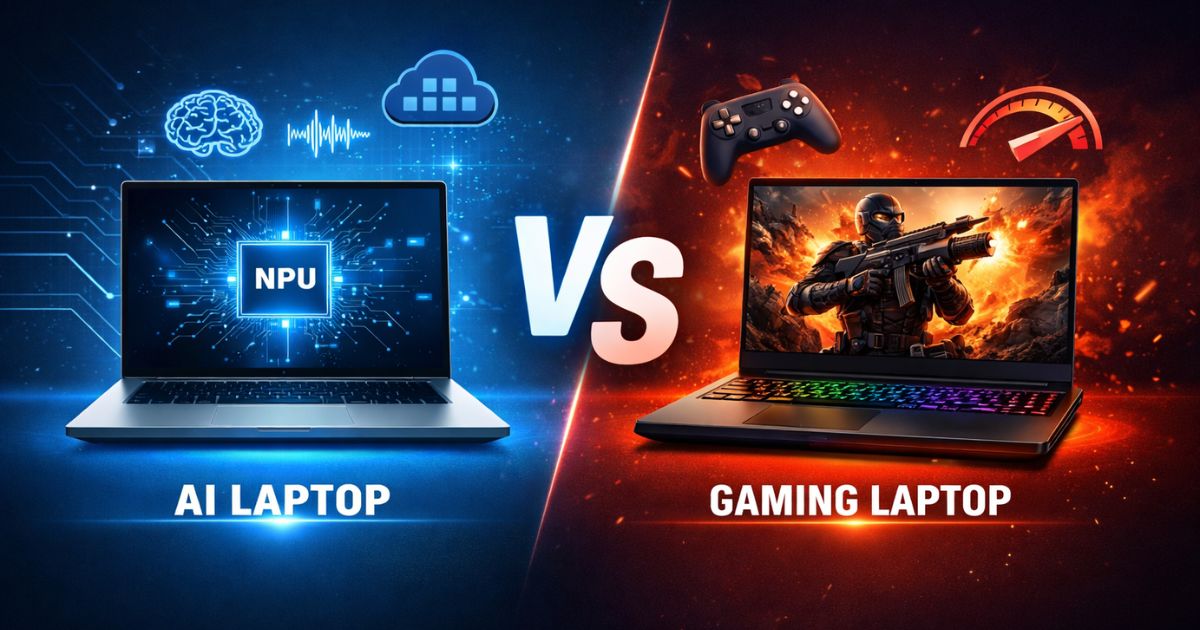
Before understanding TOPS, it’s important to have an idea of what NPU is. So modern devices now come with a specialized chip, which is called a Neural Processing Unit (NPU). It is specially designed for running AI and machine learning workloads on devices like phones, laptops, wearables, and more. Instead of trying to process tasks on the CPU or GPU, the NPU focuses on the math-heavy operations used in things like neural networks. As a result, smaller devices can run AI tasks more efficiently at lower power.
Why Is TOPS Used?
AI workloads need huge amounts of math, especially matrix multiplications. And companies needed a simple way to describe how fast a chip can handle this type of work. That is where TOPS comes in. It provides a single number that reflects the maximum number of operations the NPU can perform every second.
Because AI chips differ so much from general CPUs, TOPS became the easiest way to compare one NPU with another.
How TOPS Is Calculated?
The TOPS value is determined by how many operations the processor can perform in each clock cycle, multiplied by the clock speed, and multiplied again by the number of compute units inside the NPU. The final number represents how many trillions of operations can be done in a single second.
It is a theoretical maximum, but it offers a consistent way to measure peak compute throughput. According to Lenovo, TOPS is calculated by multiplying:
operations per clock cycle × clock frequency × number of processing unitsWhat TOPS Does Not Measure?
While TOPS is quite useful, it does not measure everything. It only calculates raw operations and does not reflect the type or quality of those operations. It also does not account for things like memory bandwidth, software stack performance, or thermal throttling.
Interestingly, this means that a processor with a high TOPS rating may not actually perform better in real-world AI tasks. Some industry experts point out that TOPS is an abstract metric and does not always connect well to real-world experiences.
Why Does TOPS Suddenly Matter?
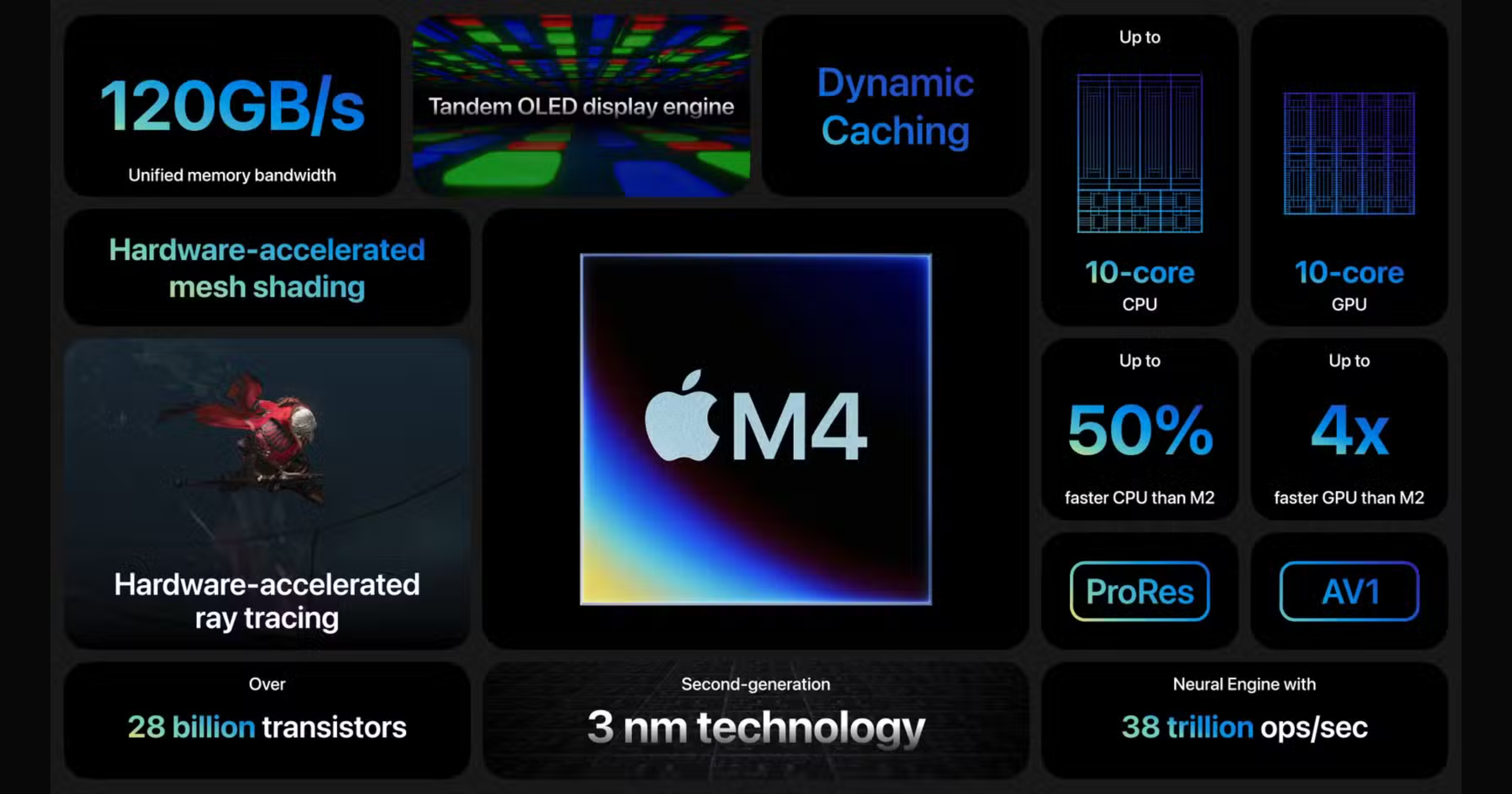
So the question that might arise in anyone’s mind is why TOPS has suddenly become so popular. Once it was a niche technical spec. But it became a mainstream marketing word since the companies wanted to market their AI PCs and on-device AI features. With more models running locally on laptops and phones, the NPU became critical, and TOPS became the simplest way to show who was ahead.
New processors from Apple, Intel, AMD, Qualcomm, and others now highlight TOPS the same way graphics chips used to highlight TFLOPS. As a result, consumers now see TOPS numbers in product launches, laptop reviews, and even retail packaging.
TOPS vs Real-World Performance
| What TOPS Represents | What Real‑World Performance Shows |
| Peak theoretical compute based on operations per cycle, clock speed, and core count. | Actual speed is much lower because workloads rarely hit perfect conditions. |
| Measures trillions of operations per second with no consideration for memory bottlenecks. | Memory bandwidth limitations can cut performance by 20–50% or more. |
| Assumes ideal data flow with no stalls or overhead. | Real workloads include data movement delays and software overhead that slow execution. |
| Serves as a simple marketing number for comparing NPUs. | Reviewers note TOPS can be “largely meaningless” without context. |
| Counts low‑precision operations (like INT8), which inflate the score. | Different models require different precisions, changing real performance drastically. |
| Suggests bigger number = better NPU. | Lower‑TOPS chips sometimes outperform higher‑TOPS chips in tasks like vision or speech. |
The Future of NPU Performance Metrics
TOPS is going to stay around for a while as a marketing number. But the industry is already shifting toward richer and more meaningful metrics. Benchmarks like MLPerf and vendor‑neutral suites such as InferenceMax are becoming more important because they test real software stacks, model behavior, and efficiency across different devices compared to just the raw math output.
Apart from that, new cross‑platform tests like Geekbench AI also show that general‑purpose synthetic scores are being replaced by AI‑specific ones designed to capture real workloads on CPUs, GPUs, and NPUs. And with the edge AI market expected to grow to nearly $90 billion by 2029, the need for more accurate performance metrics will only continue to rise.
Furthermore, some completely new metrics are emerging too. There are research groups evaluating ultra‑low‑power μNPUs by looking at efficiency and predictable latency across shared quantization pipelines than peak compute numbers. There is even work on standardized frameworks like NPUEval, which measure kernel generation quality and low‑power inference using controlled criteria.
So I feel that going forward, AI hardware measurement will look a lot more like how we test cars or cameras. Instead of quoting a single number like horsepower or megapixels, we will start looking for more practical tests like “How fast does my model run?” or “How long does the battery last during AI tasks?” That kind of shift seems almost inevitable as AI becomes something people use every day instead of a niche technical feature.
FAQs
Yes, 50 TOPS is good for AI, especially for multi-tasking like video editing with transcription or professional workloads on AI PCs.
For basic AI tasks like web browsing or simple Copilot, 20-30 TOPS suffices. Standard smooth experiences need 40 TOPS, while multi-tasking or professional use requires 45-50+ TOPS.
40 TOPS means 40 trillion operations per second, a benchmark for AI accelerators like NPUs to handle tasks such as real-time translation or Copilot+ features efficiently on-device.
The NVIDIA RTX 4090 delivers around 1,321 AI TOPS from its Tensor Cores, making it ideal for demanding generative AI, deep learning, and content creation far beyond NPU levels.