



Whenever we think about buying smart glasses with cameras, the first name that comes to mind is the Ray-Ban Meta AI glasses. They are currently the most popular option in the segment. In fact, Counterpoint Research reports that the global smart glasses market grew 139% YoY in H2 2025, driven by Meta’s expanding portfolio. This shows how fast the category is growing. However, the Ray-Ban Meta glasses are still too expensive for most people who simply want to try smart glasses and experience what it feels like to capture the world around them with AI-powered features.
So if you were thinking about getting a new pair of AI glasses then you are in luck. In this guide i have compiled some of the best AI glasses with a camera that you can buy without breaking the bank.
Amwentu V03 AI Smart Glasses
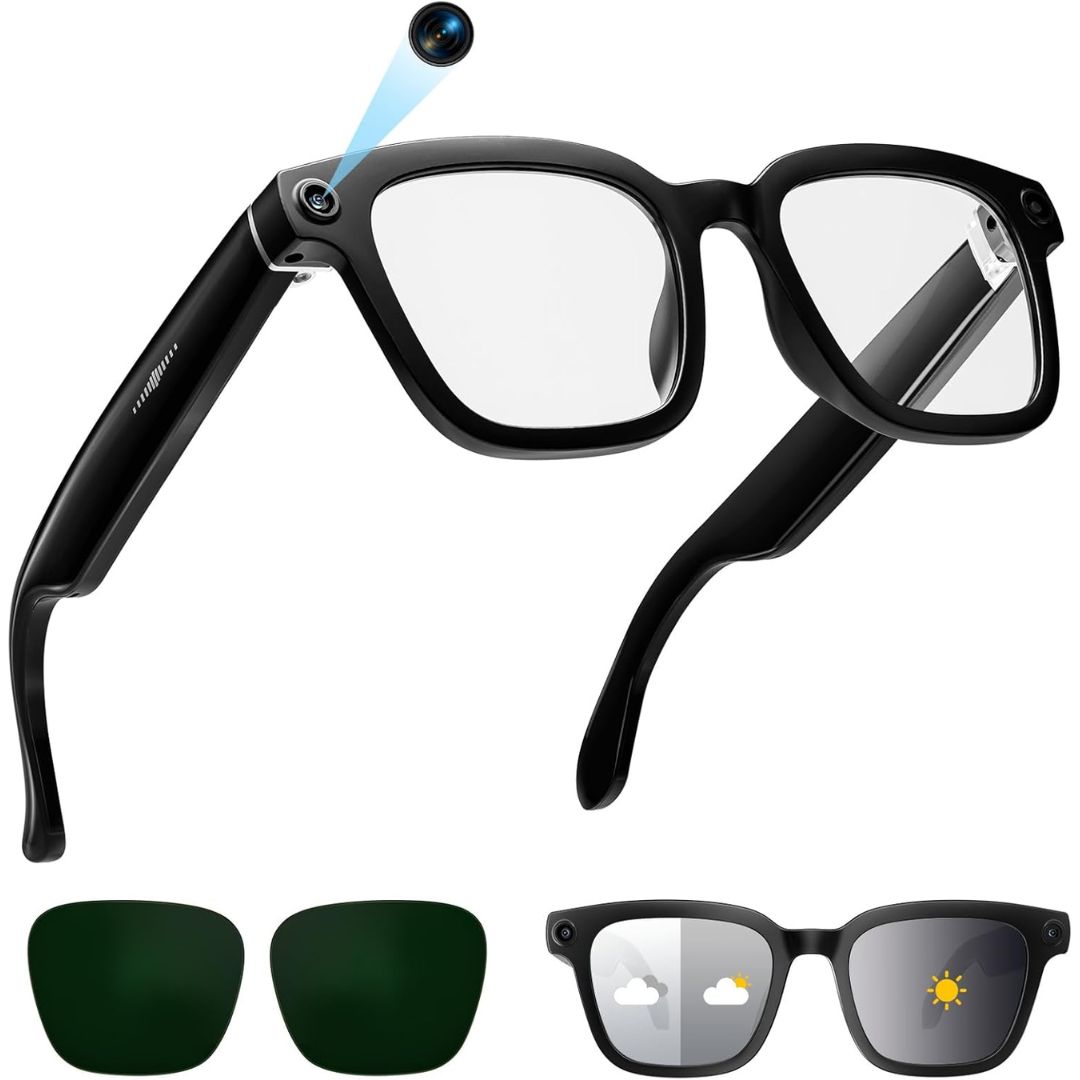
The Amwentu V03 AI Smart Glasses priced at $128 includes an 8MP camera that records 1080p video and supports multi-frame noise reduction and stabilization. This allows users to capture hands-free clips during travel, cycling, or daily use.
One of its key additions is real-time voice translation and AI image recognition. Users can point the camera at objects or text and get responses through the companion app and voice assistant. The glasses also support open-ear audio, so you can listen to music or take calls without blocking surrounding sound.
The package includes both clear and sun lenses, and the lenses adjust automatically based on light. Battery life is rated for up to 8 hours of audio use, while video recording duration is limited to shorter sessions.
Cyxus AI Smart Camera Glasses
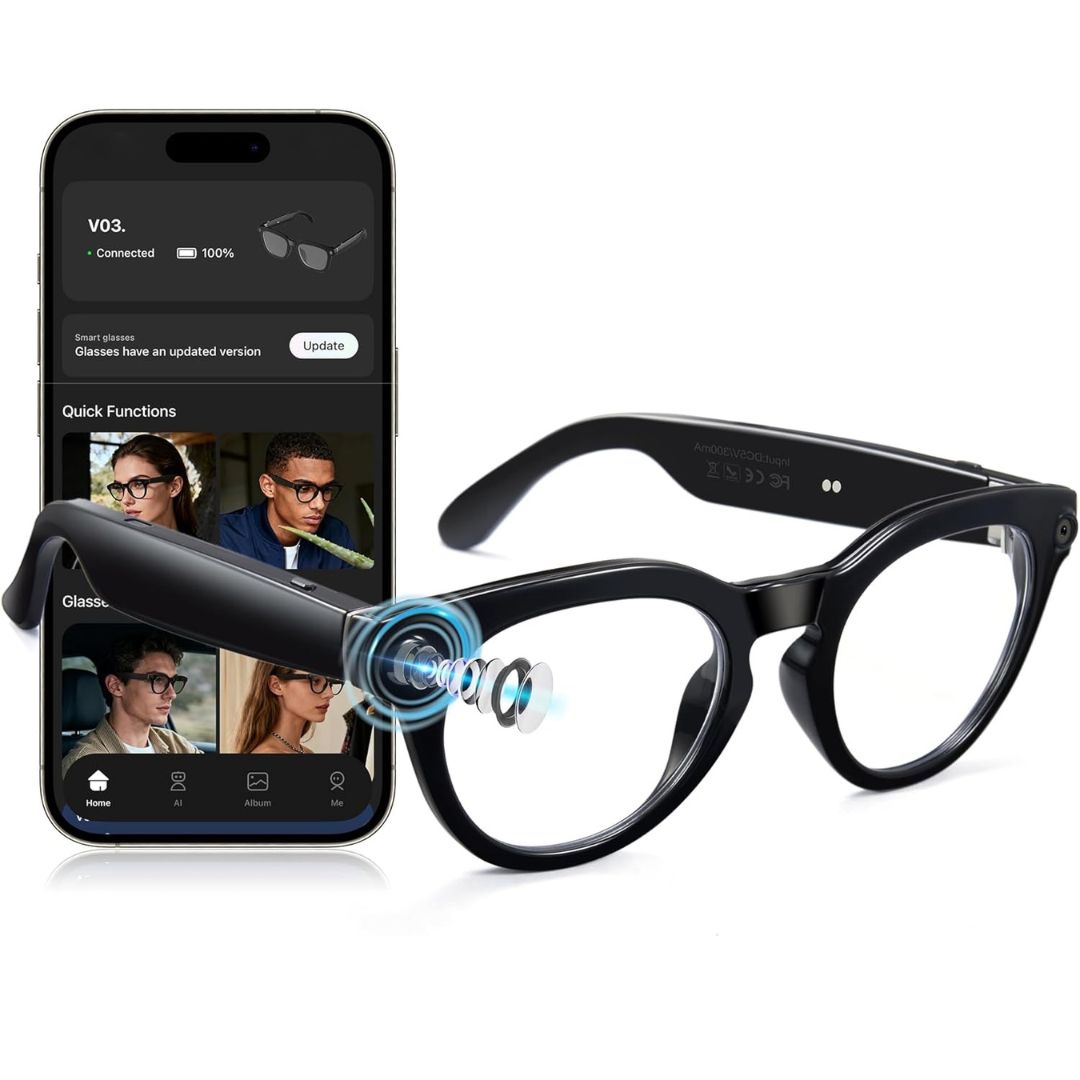
The Cyxus AI Smart Camera Glasses cost $129 and pack an 8MP camera with storage and AI features. The camera supports 1080p video recording and high-resolution photos. It also includes 4GB RAM and 32GB storage, allowing users to store photos and videos directly on the device before transferring them to a phone.
The glasses support real-time translation in multiple languages through the mobile app. There is also a built-in voice assistant that responds to commands and can identify objects using the camera.
Cyxus uses a TR90 frame and weighs around 42 grams, which is designed for extended wear. It also supports Bluetooth audio, hands-free calling, and music playback. Battery usage varies depending on camera and audio usage, with shorter recording sessions compared to standby time.
GenXenon AI Smart Glasses
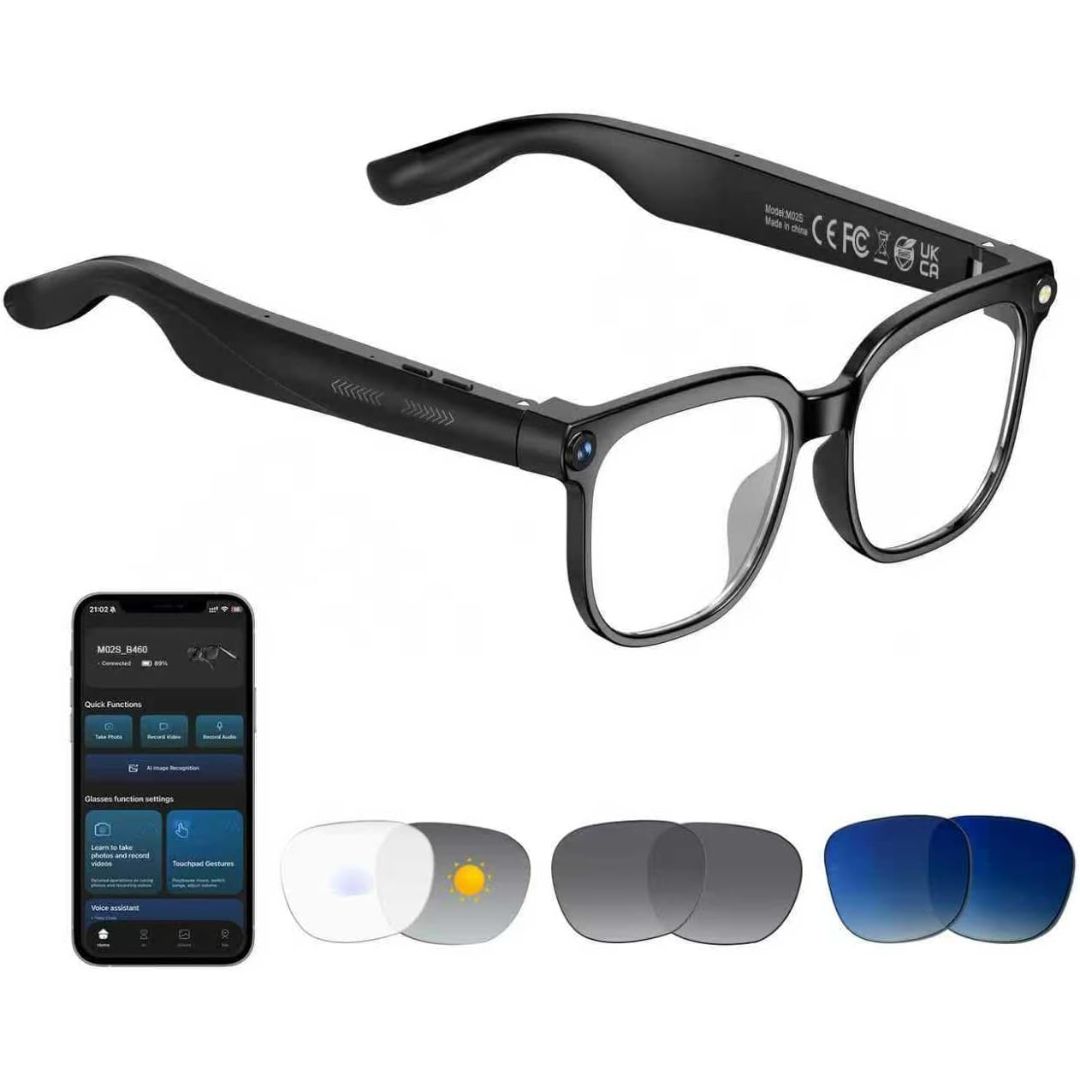
The GenXenon AI Smart Glasses cost $79 and include an 8MP camera that records 1080p video at 30 frames per second. The camera uses a wide-angle lens designed to capture scenes from a first-person perspective. This allows users to record activities like travel, meetings, or outdoor use without holding a camera.
These glasses also support AI features like object recognition, transcription, and translation in multiple languages through a connected app. The built-in storage allows photos and videos to be transferred to a phone, after which the internal storage clears automatically for future use.
The glasses include polarized lenses and blue light filter lenses, which can be swapped based on usage. Battery life supports several hours of audio playback, while video recording duration is shorter. The frame is designed for general daily use and outdoor activities.
BooaBei AI Smart Glasses
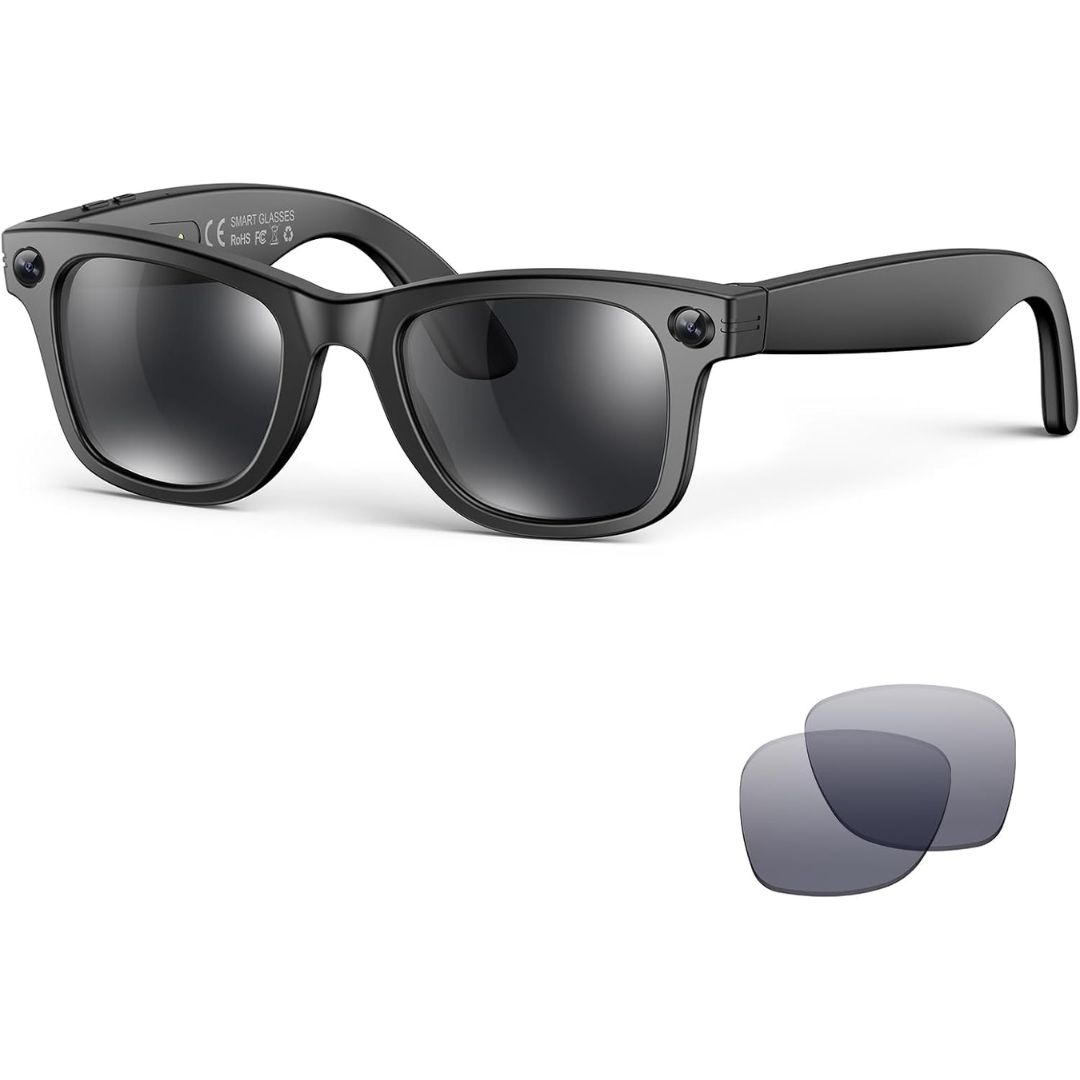
This $199 AI glasses flaunt an 8MP camera for capturing photos and videos. The glasses also support AI assistant features that respond to voice commands and provide information using a connected app.
They support translation and image recognition features, allowing users to identify objects or translate conversations.
The glasses also support Bluetooth audio for music and calls. Battery capacity supports extended standby and audio use, while the frame includes water resistance for outdoor use.
That’s all for now. But remember, smart glasses are still a new and growing category. Big companies like Apple and Samsung are expected to enter this space soon. Apple is reportedly planning to launch its AI glasses in 2026. Samsung has also confirmed during its Q4 2025 earnings call that it will introduce its first AI glasses in 2026. Meanwhile, Snapchat has even created a separate team to focus only on developing new AI glasses.
All these moves clearly show that AI glasses could become the next big thing in consumer technology.
Disclaimer: The direct purchase link in the article are for your convenience. These are not affiliate links, and we do not earn any commission from them. They are simply provided to help you quickly find the exact device mentioned in the story.