



The AI workloads are quite demanding; a standard desktop or laptop cannot handle the requirements for training models, running interfaces, or working with large data sets. That’s why we need AI workstations with GPU acceleration. So in this article, I will cover everything about AI workstations, why AI acceleration matters, some best options available, and more.
What Is an AI Workstation?
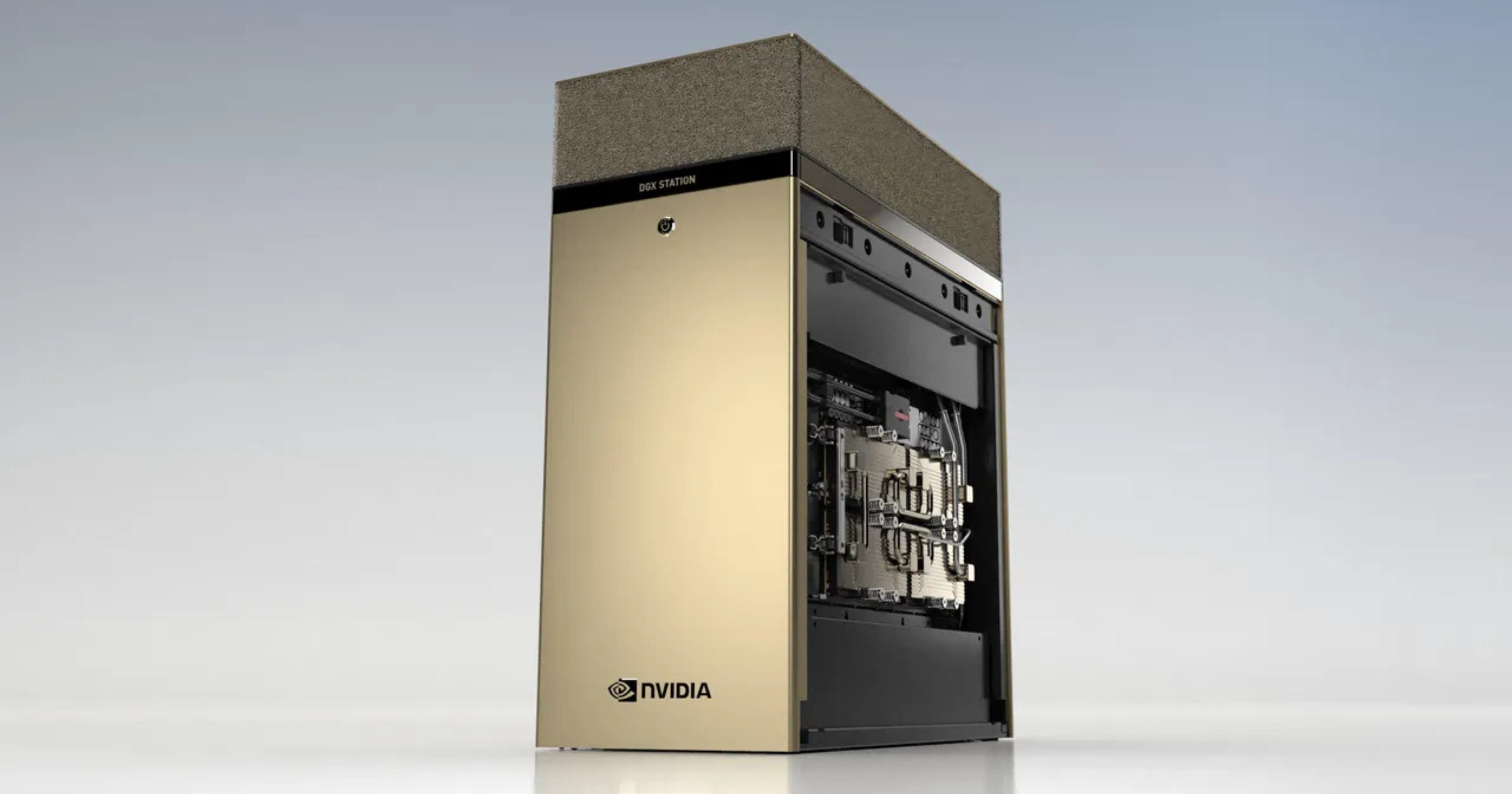
An AI workstation is a computer designed to handle machine learning, deep learning, data processing, and model experimentation. Since the AI workload needs more power, these systems are built to sustain heavy computational loads for longer durations.
How AI Workstations Are Different From Regular PCs?
Regular PC or laptops are designed for everyday tasks like browsing, office work, or some creative workloads. But the AI workstations prioritise parallel processing, memory bandwidth, and thermal stability. Here are some points that makes AI workstation different from a regular computer:
- Dedicated GPUs with high compute capability
- More system memory and faster storage
- Higher power capacity and better cooling
- Components chosen for sustained performance, not short bursts
Why GPU Acceleration Matters for AI Workloads?
AI workload relies on thousands of calculations at the same time, and a GPU can handle parallel processing, which makes it far more efficient than a CPU for AI-related maths operations. Without GPU acceleration, training times can increase from hours to days or even weeks.
What Is GPU Acceleration?
GPU acceleration refers to offloading compute-heavy tasks from the CPU to the GPU. In AI, this includes tensor operations, matrix multiplication, and backpropagation. Most AI frameworks automatically use the GPU when available.
GPUs contain thousands of cores designed for parallel operations. This makes them far more efficient than CPUs for neural network calculations. For example, training a deep learning model that takes hours on a CPU may take minutes on a modern GPU.
Top Recommendations
Here are some of the best AI workstation, which allows GPU acceleration:
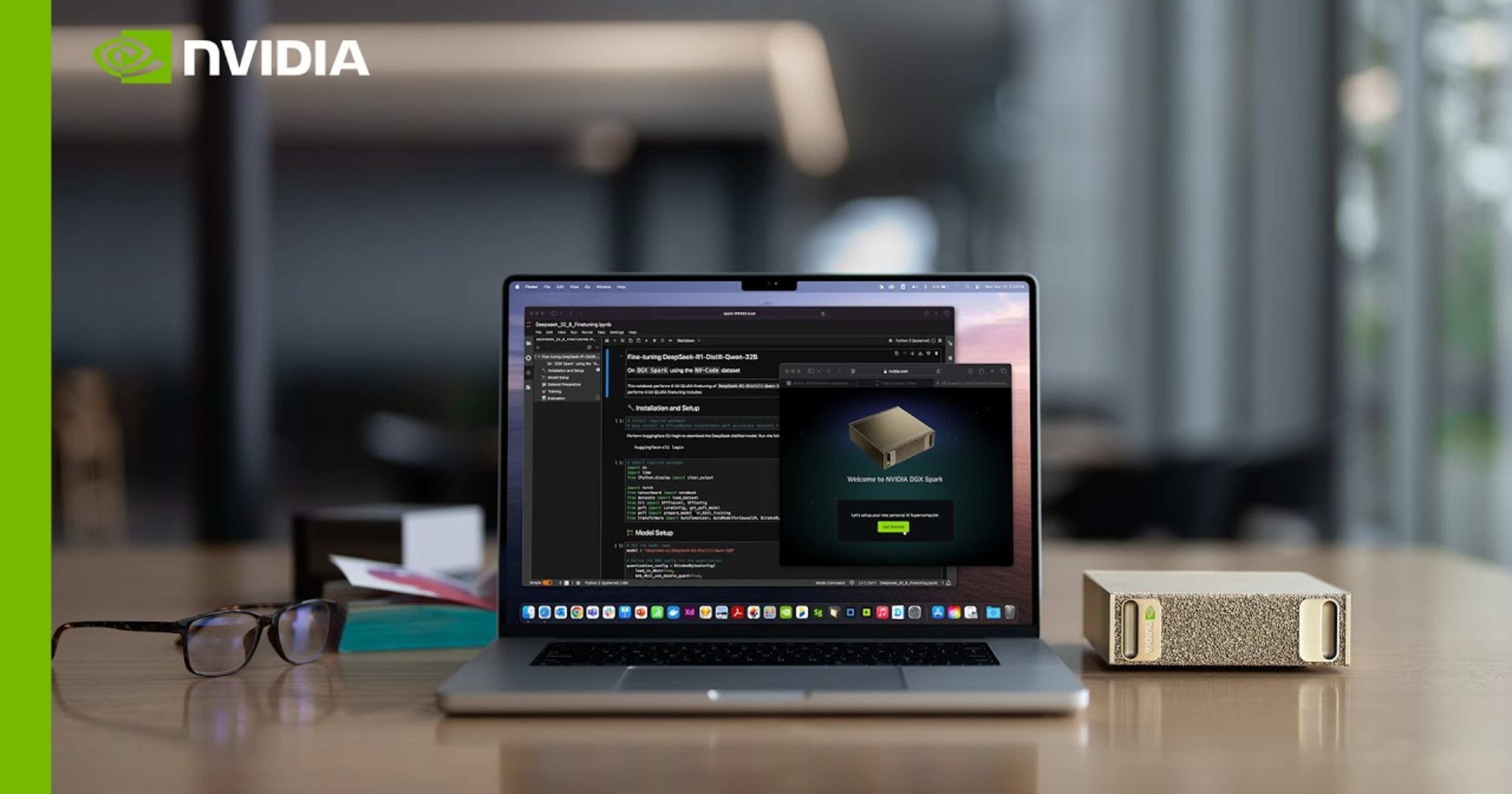
- Best Overall Pick: The NVIDIA RTX 6000 Ada workstation stands out for balanced performance. It comes with NVIDIA GB10 Grace Blackwell superchip, 1 PFLOPS of FP4 AI performance, 128GB of coherent, unified system memory, and up to 4TB storage.
- Best Value Option: RTX 5090 GPU-based systems offer strong AI compute at a lower cost.
- Best for High-End Training: NVIDIA DGX Station provides data-center power on a desk. According to NVIDIA, it is the first system to be built with the NVIDIA GB300 Grace Blackwell Ultra Desktop Superchip and 775GB of coherent memory.
Common Mistakes to Avoid When Choosing an AI Workstation
- Ignoring workload needs: Failing to match GPU, memory, and storage to specific AI tasks like training large models leads to underperformance.
- Choosing consumer-grade parts: Opting for gaming components instead of ECC RAM, server motherboards, or pro GPUs causes instability and lacks scalability.
- Overlooking cooling and power: Inadequate airflow or PSUs in high-compute setups results in throttling, crashes, or hardware damage.
- Skipping software compatibility checks: Not verifying support for frameworks like PyTorch or TensorFlow wastes time on incompatible hardware.
- Buying without future-proofing: Selecting non-expandable systems risks obsolescence as AI demands grow rapidly.
FAQs
Multiple GPUs are useful for large-scale training, but are not required for most individual projects.
Yes, gaming PCs can run AI workloads if they have compatible GPUs, enough memory, and proper cooling.
HP ZBook Fury with NVIDIA RTX 5000 Ada Generation, 64 GB DDR5-5600 RAM, 2 TB SSD Solid State Drive, offers strong mobile AI compute for on-the-go training and inference.